IIT Bombay Microelectronics: Cleanroom, Electroporation, and India's First BioMEMS Program
The formative years where the first-principles habit and the multi-strand program methodology were built
PhD and research-associate years at IIT Bombay (1999–2005). Cleanroom commissioning, in-flow single-cell electroporation in partnership with the Cancer Research Institute Mumbai, and helping my advisor build what became India's first BioMEMS program.
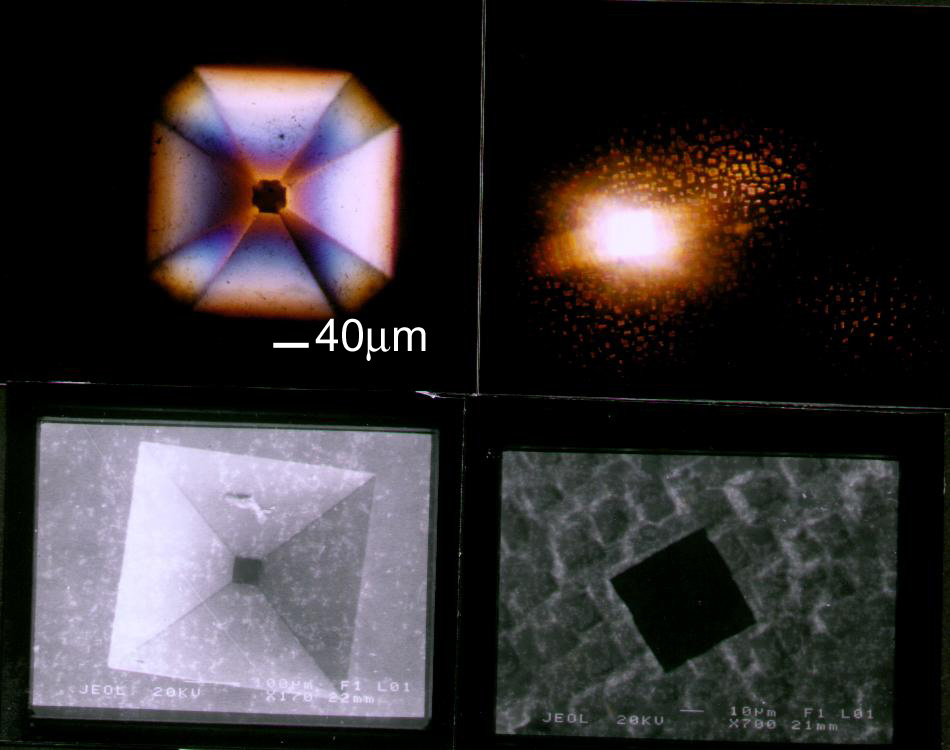
The PhD and research-associate years at IIT Bombay (1999–2005), in the Microelectronics Group of the Department of Electrical Engineering, set the method. The thesis question was whether the same impedance-sensing principle that counted cells could be extended to manipulate them, by designing apertures through which a flowing cell could be detected and then electrically transfected. Around all of it, Professor Rakesh Lal was architecting what would become India’s first BioMEMS research program; I helped him build it. Professor Jayesh Bellare was my co-advisor.
The Defining Work
The cleanroom commissioning came first, then the material exploration journey from glass through ceramics and CO₂-laser-drilled glass-epoxy to silicon, then the in-flow single-cell electroporation chip. The biological collaboration with Dr. Rita Mulherkar at the Cancer Research Institute (CRI), then part of Tata Memorial Hospital and India’s foremost cancer research institution, provided the cell lines and the assay for transfection efficiency. CRI is now ACTREC. The program required parallel tracks: aperture fabrication, electrode and electronics development, fluidic design, biological collaboration, characterization. Coordinating them, knowing which needed to gate and where the synthesis points had to converge, was the manager’s technical work I did alongside the research itself. The Corium MicroCor program ten years later was the industrial-scale formalization of this same pattern.
Outcome
A working in-flow single-cell electroporation chip. A foundational contribution to what became India’s first BioMEMS research program. The most lasting outcome was the mentorship of three Department-of-Electrical-Engineering students who joined the program as juniors and went on to distinguished academic careers: Sidhartha Goyal (now Physics, University of Toronto), Aniruddh Sarkar (now Coulter Department of Biomedical Engineering at Georgia Tech and Emory), and Bhaskar Mitra (now Electrical Engineering, IIT Delhi). Working alongside them, mentoring them, and learning from them was the deepest and most enduring reward of the period. I remained an Industrial Advisory Board member of the Semi-X Center at IIT Bombay for many years afterward.